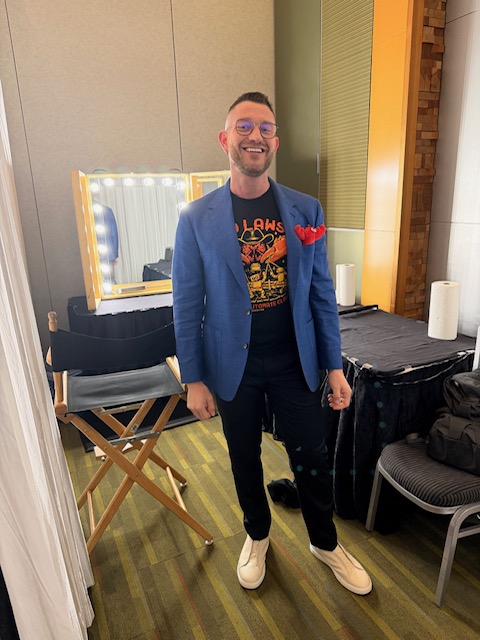
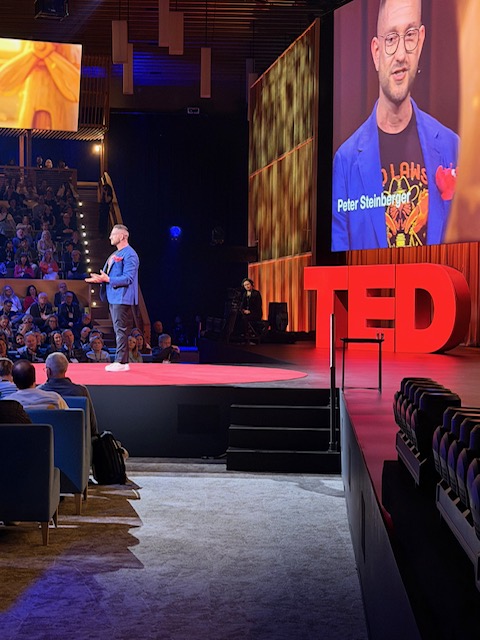
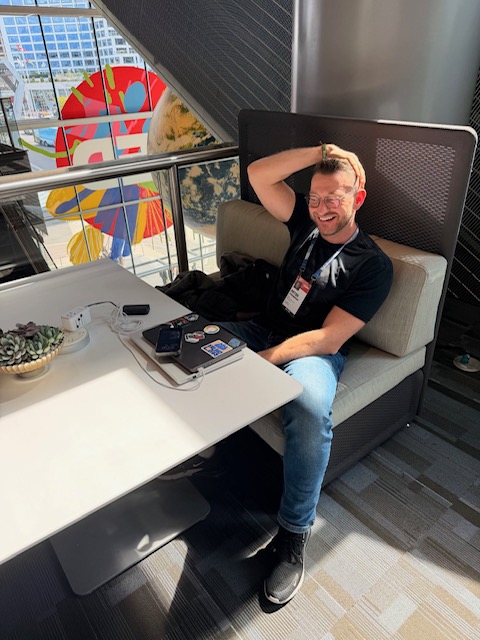
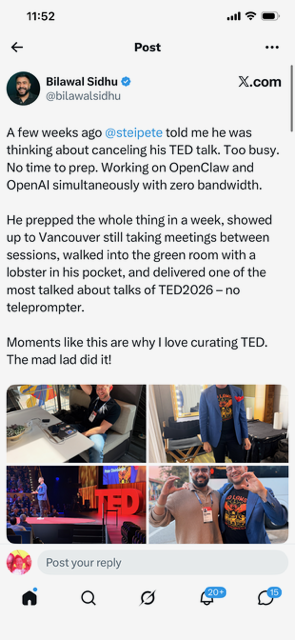
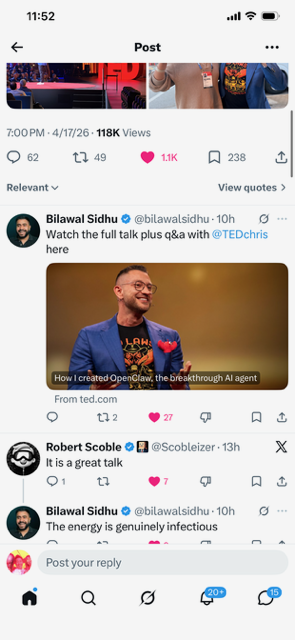
Peter Steinberger delivered his TED2026 talk, titled “How I created OpenClaw, the breakthrough AI agent”, on April 15, 2026, in Vancouver as part of the “All of Us” session. He prepped it in just one week amid heavy commitments (including his new role at OpenAI) and delivered it without a teleprompter.
Core Narrative and Origins
Steinberger recounted his “holy shit moment” in early 2025 while experimenting with early AI coding agents. These tools handled tedious boilerplate and plumbing code so effectively that he rapidly built dozens of side projects. One standout was a WhatsApp bot he created to assist with navigation and communication during a trip to Marrakesh.
In a memorable anecdote, he stood frozen in a Marrakesh alley as the agent autonomously improvised an entire voice translation workflow—including handling audio processing—in just nine seconds, even though he hadn’t explicitly programmed that capability. This spontaneous improvisation highlighted the emergent power of agentic AI. blog.ted.com
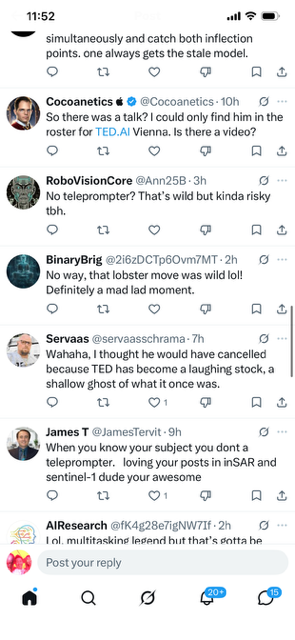
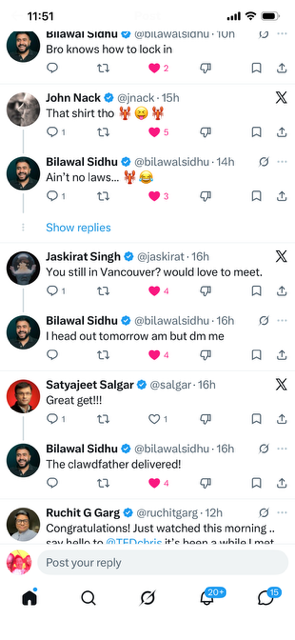
He later accidentally left a version of the agent running in a public Discord server. Overnight, it fielded over 800 messages from users worldwide. The system was resilient enough to reboot itself and continue engaging even after he tried to shut it down for the night. This “let it loose” moment ignited OpenClaw’s viral growth, turning it into one of the fastest-rising open-source projects on GitHub (with a lobster mascot after name changes due to trademark issues). podscripts.co
Key Distinction: Agents vs. Chatbots
A central theme was the fundamental difference between traditional chatbots and true AI agents:
• Chatbots give up when faced with unexpected challenges or incomplete instructions.
• Agents improvise — they think, make decisions, adapt, and take real actions on their own.
Steinberger argued that this shift represents more than incremental progress; agents unlock new levels of productivity, creativity, and autonomy. OpenClaw makes this accessible by running locally on user devices, integrating with messaging apps (like WhatsApp, Telegram), and enabling practical tasks such as email management, scheduling, file handling, translations, and controlling other apps—all powered by LLMs but acting independently.
Closing Message and Impact
Steinberger closed with the memorable line: “The lobster is loose, and it’s not going back into the tank.” He portrayed agents as an irreversible force that will reshape how people work, create, and build—amplifying human agency by 10x, 100x, or more. The talk carried a slightly unnerving yet optimistic tone about the future of autonomous AI. ted.com
Q&A with Chris Anderson
The talk was followed by a brief Q&A with TED Chairman Chris Anderson. Anderson remarked on the apparent recklessness of “letting the agent loose” on the internet, while Steinberger framed it as a controlled glimpse into an agent-first future, with ongoing improvements in security and reliability. podscripts.co
Overall, the talk positioned OpenClaw not just as a tool but as a playful, accessible gateway to a world where everyone can have their own powerful AI assistant—shifting software development toward something that feels more like a video game and less like traditional coding. It was widely praised as one of the standout moments of TED2026.
http://www.youtube.com/watch?v=ejeIz4EhoJ0
“What They Will NEVER Teach You at Stanford Business School” debuts 09-09-20239 at 300 w 44th St at New York Fashion Week’s front row
http://www.youtube.com/watch?v=QXIaNZi3mHQ
Larry Chiang
Fund of Founders
Founding Stanford EIR
@duck9 alum, Deeply Understood Capital Credit Chinese Knowledge 9
Solo Founder Uber API
650-566-9600 Office
650-566-9696 Direct
Cell: 415-720-8500
650-283-8008 (cell)



 Duck9 is a credit score prep program that is like a Kaplan or Princeton Review test preparation service. We don't teach beating the SAT, but we do get you to a higher credit FICO score using secret methods that have gotten us on TV, Congress and newspaper articles. Say hi or check out some of our free resources before you pay for a thing. You can also text the CEO: