# Michael Burry’s “Prequel” to the GameStop Saga: Foundations of the Big Short Squeeze and Prospects for a Sequel
The GameStop (GME) short squeeze of 2021 remains one of the most dramatic events in modern financial history, a David-versus-Goliath tale where retail investors, galvanized through online communities like Reddit’s WallStreetBets, drove the stock price from under $20 to nearly $500 in a matter of weeks. This frenzy exposed deep-seated issues in market mechanics, including short selling, gamma hedging, and the power of collective retail action. Recently, Michael Burry—the hedge fund manager famously portrayed in *The Big Short* for predicting the 2008 housing crisis—has revisited this saga through his Substack essay titled “Foundations: The Big Short Squeeze,” subtitled “GameStop, The Prequel.”
Published on December 15, 2025, Burry’s piece provides a retrospective on his early involvement with GameStop, framing it as the foundational chapter leading up to the 2021 explosion. This essay expands on Burry’s insights, explores community reactions, and examines the potential for a “sequel” squeeze based on current fundamentals and market dynamics, drawing from Burry’s analysis, related discussions on X (formerly Twitter), and supporting financial commentary.
## Burry’s Early Bet: The Prequel to Chaos
Michael Burry’s engagement with GameStop predates the meme-stock mania by years, beginning in 2019 when he identified the company as an undervalued opportunity amid its struggles in the brick-and-mortar video game retail space. In his Substack post, Burry details how he accumulated a significant stake—over 5% at one point—and actively pushed for corporate changes.<grok:render card_id=”72ddf4″ card_type=”citation_card” type=”render_inline_citation”>
<argument name=”citation_id”>0</argument>
</grok:render> He advocated aggressively for share buybacks, arguing that GameStop’s cash reserves could be used to reduce outstanding shares, thereby increasing value for remaining shareholders. This strategy, he notes, was lucrative not only through potential price appreciation but also via lending out his shares to short sellers at high double-digit rates, turning his position into a dual-income play.
Burry’s narrative highlights key interactions that set the stage for later events. He recounts meetings with Ryan Cohen, the Chewy co-founder who would later become GameStop’s CEO and a central figure in the company’s turnaround efforts. Burry positions these early moves as the “prequel” to the 2021 squeeze, emphasizing how his calls for buybacks and strategic pivots laid the groundwork for the stock’s volatility. Importantly, Burry clarifies the mechanics behind the eventual squeeze: contrary to popular narratives fixated on “naked shorts” (illegal short selling without borrowing shares), he attributes the price surge primarily to a classic gamma squeeze.<grok:render card_id=”a01736″ card_type=”citation_card” type=”render_inline_citation”>
<argument name=”citation_id”>11</argument>
</grok:render> This occurs when options dealers, hedging their positions against massive retail call-option buying, are forced to purchase underlying shares en masse, creating a self-reinforcing upward spiral.
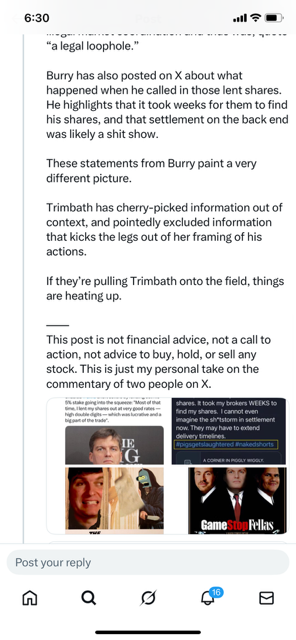
Burry’s reflections also touch on systemic flaws exposed by the episode. He describes delays in settling lent shares—taking weeks in some cases—hinting at inefficiencies in the back-end settlement process that amplified the chaos. These insights align with broader critiques of Wall Street’s infrastructure, where high-frequency trading and opaque shorting practices can distort fair pricing. By framing his involvement as supportive of retail investors, Burry counters accusations of enabling short sellers, instead portraying his actions as a calculated bet on GameStop’s undervaluation.
## Community Backlash and Defense: The X Discourse
Burry’s Substack has ignited fervent discussion within the GameStop community, particularly on X, where retail investors continue to monitor the stock closely. Economist Susanne Trimbath, a vocal critic of short-selling practices, highlighted Burry’s share-lending as enabling the very short positions that retail aimed to squeeze in 2021.<grok:render card_id=”21ae36″ card_type=”citation_card” type=”render_inline_citation”>
<argument name=”citation_id”>18</argument>
</grok:render> In a post quoting a Business Insider article, Trimbath argued that Burry’s lending at lucrative rates was the “real headline,” painting him as complicit in the system’s inequities.
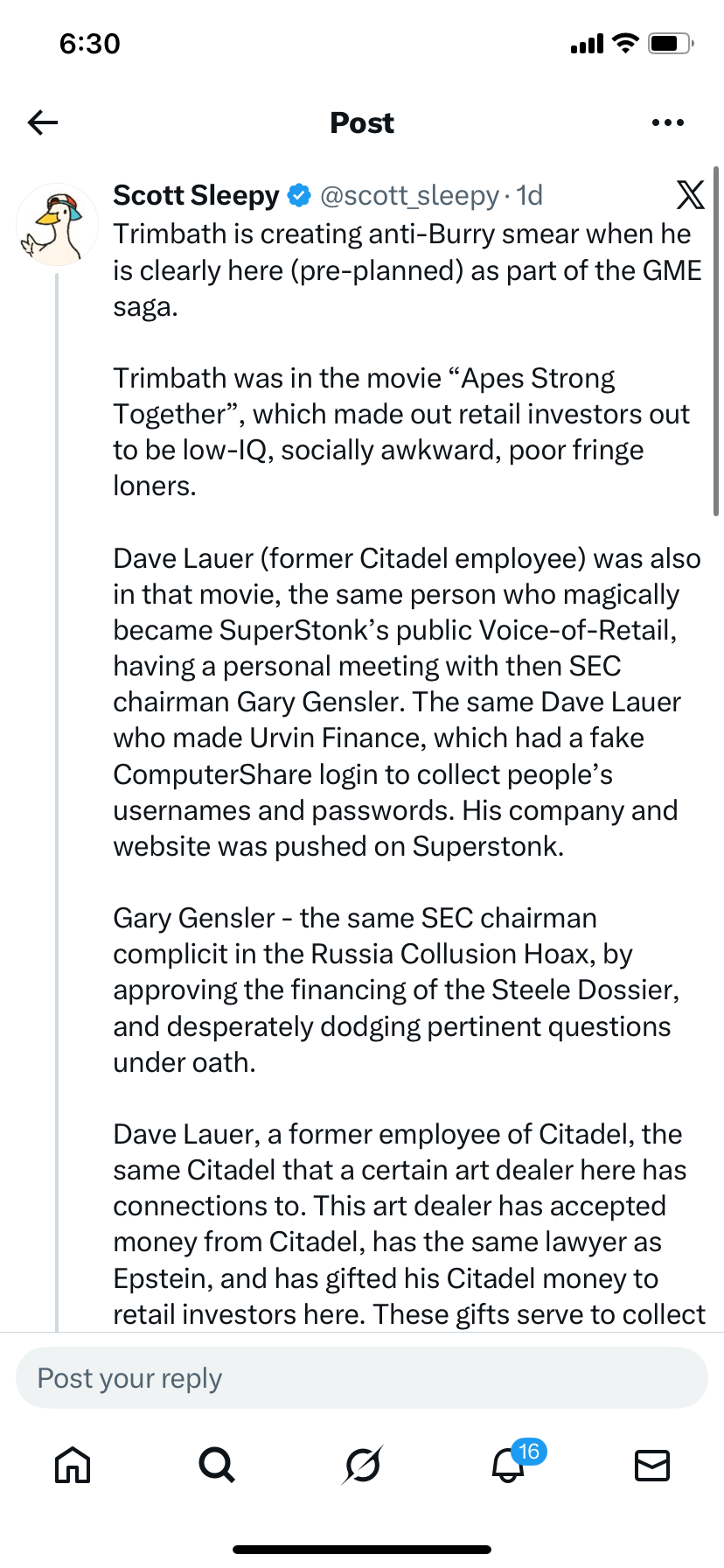
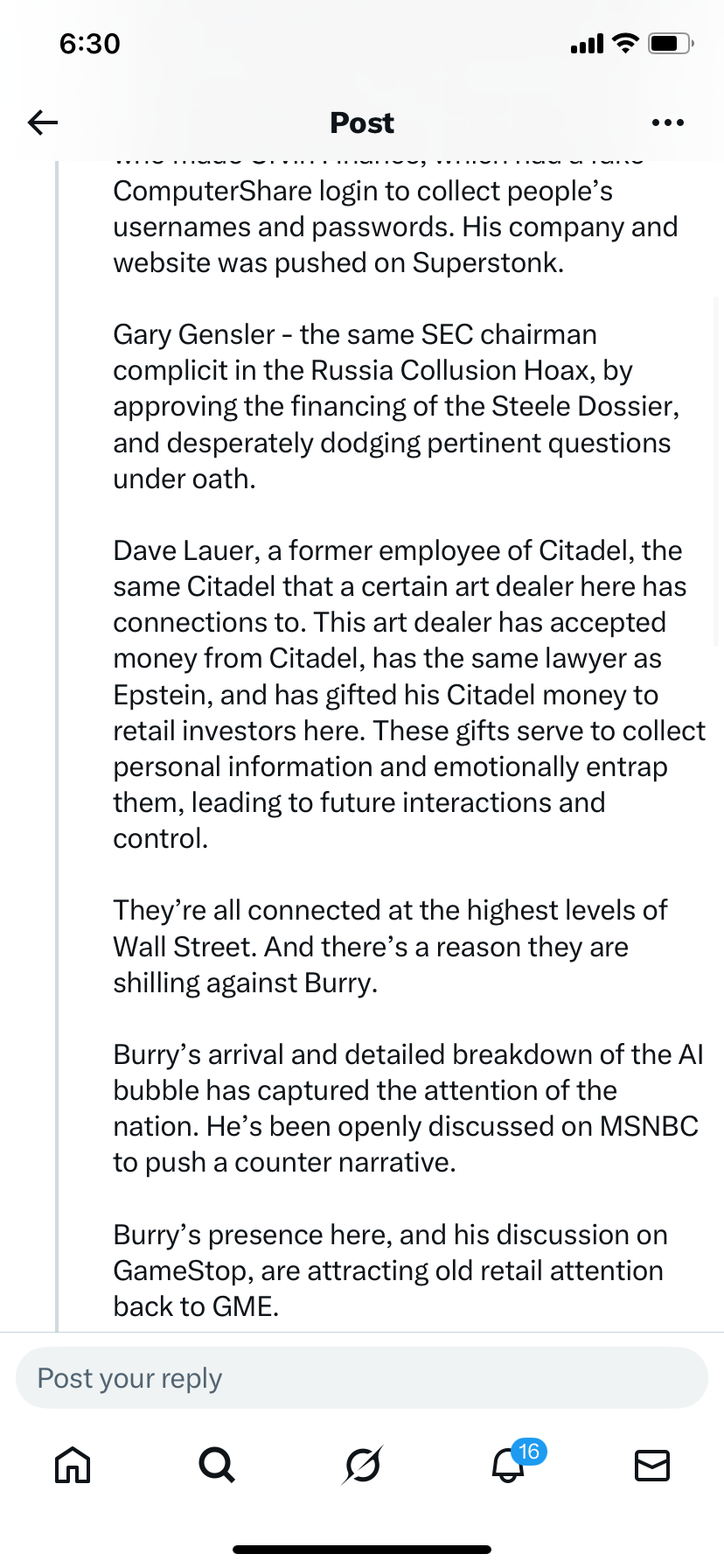
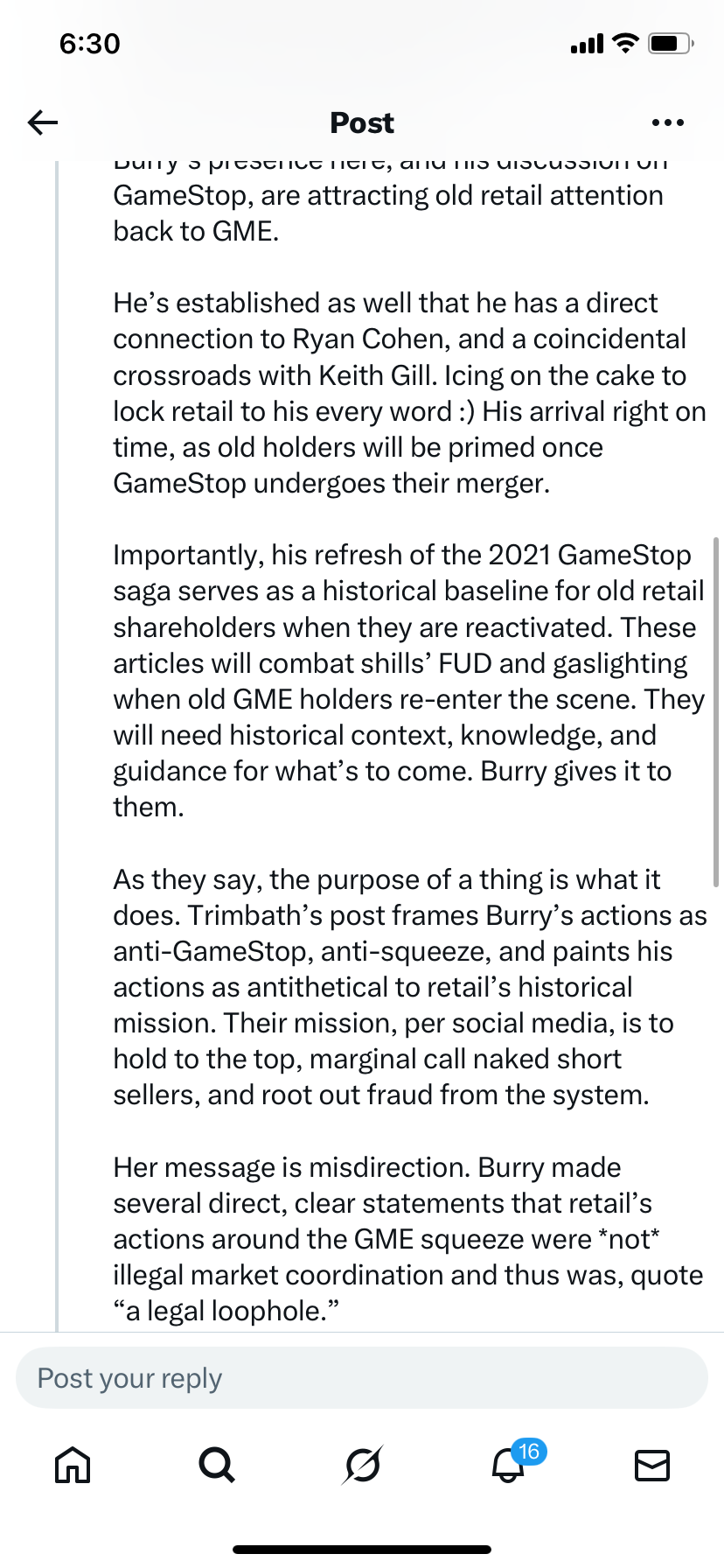
This criticism drew swift rebuttals. In a detailed thread, user @scott_sleepy defended Burry, accusing Trimbath of “anti-Burry smear” and connecting her to broader narratives that undermine retail sentiment.<grok:render card_id=”855cab” card_type=”citation_card” type=”render_inline_citation”>
<argument name=”citation_id”>18</argument>
</grok:render> Scott_sleepy points out Burry’s explicit statements that retail coordination in 2021 exploited a “legal loophole” without constituting illegal manipulation. He also links Burry’s arrival to upcoming GameStop developments, such as potential mergers, suggesting the essay serves as a “historical baseline” to arm returning investors against misinformation. This defense frames Burry not as an antagonist but as an ally exposing market frailties, with his direct ties to Cohen adding credibility.
Entrepreneur Larry Chiang, a self-proclaimed GameStop investor since 2021, amplified this narrative in his X reply to the thread, linking to his Duck9 blog where he “blogged this tweet.”
Chiang’s blog post, “Can’t Stop GameStop,” echoes Burry’s mechanics explanation, dismissing naked-short theories in favor of gamma hedging from retail options activity.
He positions Burry’s essay as essential reading for understanding the prequel, while teasing a “sequel” driven by GameStop’s strengthened position.
## Current Fundamentals: Setting the Stage for a Sequel?
As of December 20, 2025, GameStop’s fundamentals provide fertile ground for speculation on a potential repeat event. The company holds approximately $4.6 billion in cash against a market capitalization of around $10 billion, offering a robust balance sheet for strategic moves like acquisitions or further buybacks.
Short interest stands at about 16%, lower than the peaks of 2021 but still significant enough to fuel volatility if retail momentum returns.
Chiang’s blog highlights these metrics, arguing that GameStop’s cash hoard—bolstered by Bitcoin holdings and operational efficiencies—positions it for explosive growth.
Other Duck9 entries, such as “Squeeze Me Sideways,” predict a short squeeze based on Q2 2025 earnings showing $8.7 billion in cash and positive non-GAAP EPS, contrasting sharply with the company’s near-bankruptcy narrative from years prior.
“GameStops On Sale” critiques market inefficiencies, suggesting that controlled pricing suppresses GME’s true value, much like the 2021 distortions.
Chiang’s X posts, filled with hashtags like #LABCS1452, reinforce his bullish stance, often tying GameStop to broader themes like Bitcoin integration and shareholder advocacy.
Community sentiment on platforms like Reddit’s Superstonk subreddit mirrors this optimism, with users dissecting Burry’s post as a call to action.<grok:render card_id=”30b66c” card_type=”citation_card” type=”render_inline_citation”>
<argument name=”citation_id”>2</argument>
</grok:render> Discussions emphasize offshore derivatives and rehypothecation—practices where shares are collateralized multiple times—potentially inflating effective short exposure beyond reported figures.
If retail options volume surges again, a gamma ramp could ensue, amplified by GameStop’s liquidity.
## Challenges and Broader Implications
Despite the hype, risks abound. Regulatory scrutiny post-2021 has tightened, with the SEC monitoring meme-stock activity more closely. Burry himself warns of market gluttony in related posts, critiquing supply-side excesses that could lead to broader corrections.
Moreover, GameStop’s core business faces ongoing headwinds from digital gaming shifts, necessitating Cohen’s vision for transformation—possibly into a tech or e-commerce powerhouse.
The saga’s implications extend beyond GME, underscoring the democratization of finance. Retail’s ability to challenge institutional shorts via social media and options trading has reshaped power dynamics, but it also highlights vulnerabilities like misinformation and emotional trading. Burry’s prequel reminds us that such events are rooted in fundamental analysis, not just memes.
## Conclusion
Michael Burry’s “Foundations: The Big Short Squeeze” serves as a compelling prequel, illuminating the strategic maneuvers that preceded the 2021 GameStop frenzy and affirming retail’s role in exploiting market loopholes
Whether this manifests remains uncertain, but the enduring fascination with GME underscores a pivotal shift: in today’s markets, individual investors wield unprecedented influence, turning underdogs into potential disruptors. As Burry’s insights suggest, the next chapter may hinge not on conspiracy, but on calculated fundamentals and collective resolve.




 Duck9 is a credit score prep program that is like a Kaplan or Princeton Review test preparation service. We don't teach beating the SAT, but we do get you to a higher credit FICO score using secret methods that have gotten us on TV, Congress and newspaper articles. Say hi or check out some of our free resources before you pay for a thing. You can also text the CEO: