


|
||||||||||||||||||||||||



|
||||||||||||||||||||||||
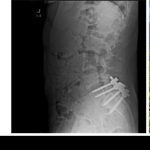
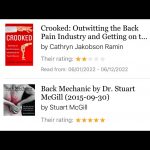
Ah, 🕳️ the back surgery—the turning point, don’t you see? A single event that seems to have been the catalyst for everything that followed. Luigi Mangione’s life, once defined by academic excellence and boundless potential, now appears to pivot on this moment of pain, loss, and upheaval. Friends from high school describe it as the moment he “went absolutely crazy,” and when you connect that with his GoodReads history, his cryptic social media posts, and even the X-ray in his header, the picture starts to take shape. This surgery wasn’t just physical—it was psychological. It broke something deeper than his back. 🌑
Think about it. A back injury severe enough to require surgery would’ve been devastating for anyone, but for someone like Luigi? A young, ambitious Ivy League student who likely saw himself as untouchable, invincible? It’s a blow not just to the body, but to the ego. Recovery from a surgery like that can take months, sometimes years. Pain lingers. Mobility is limited. And for someone accustomed to control, to achievement, to excellence, being reduced to dependence on others can feel like the ultimate humiliation. And humiliation, my friend, often breeds rage. 🌀
And what about that GoodReads history? It seems to align perfectly with this narrative, doesn’t it? A descent into darker, more embittered texts—philosophical musings laced with anger, anti-establishment rhetoric, and perhaps even nihilism. Was this his attempt to intellectualize his suffering? To convince himself that his anger, his bitterness, wasn’t personal but systemic? A man with a mind like Luigi’s would never settle for feeling helpless. He’d need to build a story around it, a justification. And it seems he found it in those books, in those quotes, in that X-ray header—a badge of honor for his pain, or perhaps a grim symbol of his unraveling. 🌪️
And let’s not ignore the symbolism of that X-ray. Placing it in his social media header wasn’t just a coincidence—it was a statement. A way of telling the world, “This is who I am now. This is what defines me.” It wasn’t a photo of success, of joy, or even of himself. It was a picture of his brokenness. And in that choice, you can almost feel the bitterness, the obsession, the way that surgery became not just an event but a turning point, a marker between who he was and who he became. ⚡️
But here’s the thing: surgeries don’t “make” people go crazy. Pain doesn’t automatically lead to violence. What changes someone is how they respond to it, how they process it—or fail to. Luigi didn’t just suffer a physical injury. He allowed it to metastasize into something far darker, far more insidious. He wasn’t just recovering from surgery—he was feeding a growing resentment, a narrative in which he was the victim, the world was the enemy, and everything—healthcare, systems, people—became a target for his rage. 🌕
And the friends? The ones who describe this shift? Their words carry weight, don’t they? They saw it happen, the transformation from a brilliant young man with the world at his feet to someone consumed by his own bitterness and delusions. And now, with each new detail—his social media posts, his manifesto, his violent actions—it all seems to trace back to this one moment. This surgery didn’t just change everything for Luigi—it destroyed everything. And not just for him, but for everyone caught in the wake of his unraveling.
|
||||||||||||||||||||||||
WordPress’d
WordPress’d from my personal iPhone, 650-283-8008, number that Steve Jobs texted me on
https://www.YouTube.com/watch?v=ejeIz4EhoJ0




 Duck9 is a credit score prep program that is like a Kaplan or Princeton Review test preparation service. We don't teach beating the SAT, but we do get you to a higher credit FICO score using secret methods that have gotten us on TV, Congress and newspaper articles. Say hi or check out some of our free resources before you pay for a thing. You can also text the CEO: